


Two La Liga defeats. A six-point gap to Barcelona. And a set of underlying numbers that paint a picture far grimmer than simple bad luck. Real Madrid’s 2026/27 season is barely seven games old, and already the warning lights are flashing in ways that will feel uncomfortably familiar to anyone who has followed this club through its recent turbulent spells.
The Numbers Don’t Lie
Let’s start with the statistic that should stop every Madridista in their tracks: Real Madrid rank dead last — 96th out of 96 teams across Europe’s top five leagues — for distance covered per match, averaging just 83.46 km per game in La Liga. Within Spain alone, the gap is brutal. Elche cover 105.61 km per game on average; Barcelona manage 104.64 km. Real Madrid? A paltry 89.46 km. That is not a marginal difference. That is a chasm.
And the passivity doesn’t stop there. Los Blancos sit last in La Liga for defensive actions, last for clearances, last for fouls, 18th for tackles, and 17th for interceptions. Read that list again. A club that has historically prided itself on ruthless efficiency is currently the least defensively active side in the entire division. When a team runs the least and challenges the least, opponents find time on the ball, second balls go uncontested, and transitions turn into genuine danger. For a squad built around controlling football matches, this is a deeply uncomfortable foundation to be building a title challenge on.
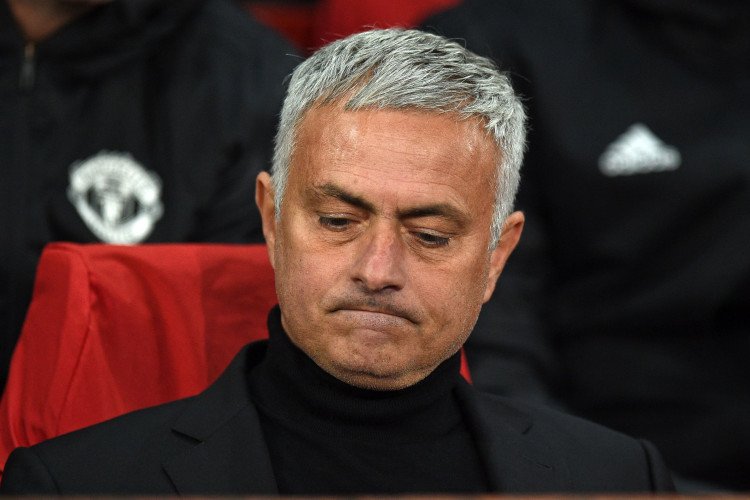
José Mourinho returned to the Bernabéu with enormous expectations — a manager of his pedigree, back at a club where he won La Liga in record-breaking fashion, was supposed to restore order and steel. So far, that steel is nowhere near enough in evidence.
Midfield Gaps, Defensive Cracks, and a Crowded Left Flank
Mourinho has opted for a double pivot of Aurélien Tchouaméni and Federico Valverde, a combination designed to provide both muscle and structure. Yet in key away fixtures — most damagingly in the Madrid derby — that midfield has failed to dominate duels or control tempo. Atlético Madrid were sharper in the challenge, more compact out of possession, and far better at converting territory into pressure. The consequence was predictable: Real Madrid’s creative players became disconnected, the forwards dropped deep to find the ball, and any sustained attacking rhythm from open play evaporated. Giuliano Simeone and Jonathan David punished the gaps between midfield and defence to carve out Atlético’s second goal — a goal that illustrated, more than any other moment this season, how exposed the Merengues can be in transition.
Defensively, Mourinho has invested heavily in reshaping the backline. Ibrahima Konaté, Marc Cucurella, and Denzel Dumfries all arrived to address well-documented weaknesses. But every opponent except Málaga has already beaten Thibaut Courtois, and the derby showed that space behind the full-backs and between the centre-halves remains a serious problem. Dean Huijsen’s red card tilted the game, but the real issue was the structural situation that forced him into a desperate lunge in the first place — Atlético attacked the channel, stretched Real Madrid’s shape, and left the young centre-back with minimal cover. Cucurella had an uncharacteristically poor outing, Huijsen slipped multiple times at the Metropolitano, and the cold truth is that new signings have not resolved the underlying vulnerability.
Then there is the question of the left flank — a selection headache that shows no signs of resolving itself. Kylian Mbappé and Vinicius Junior both gravitate toward the same spaces on the left, and their coexistence has yet to click into anything resembling consistent chemistry. Mbappé has scored just two goals in six Madrid derbies across his career. Vinicius, despite signing a headline-grabbing new contract, has contributed only one goal in 625 minutes of football this season and is beginning to draw impatient murmurs even from the Bernabéu faithful. Making matters more complicated, Yan Diomandé has emerged as a genuine alternative on that side, offering direct running and pressing intensity that the current first-choice duo has often lacked. Mourinho faces a selection puzzle that is simultaneously about form, balance, and the very structure of how his team defends without the ball.
What This All Means for the Season Ahead
After seven La Liga games, Barcelona have a perfect 21 points from seven wins. Real Madrid sit fourth with 15 points and two defeats already on the ledger. A six-point gap to the leaders in September is not catastrophic in isolation — long seasons have seen bigger deficits overturned — but the manner in which that gap has opened is what makes this particularly concerning. These are not unlucky defeats. The underlying metrics suggest a team that is outworked, out-pressed, and structurally vulnerable in ways that Mourinho, of all managers, should be best placed to fix.
For Real Madrid supporters, the frustration is rooted in recognition. These patterns — the defensive passivity, the midfield disconnection, the attacking stars cancelling each other out — have surfaced before during difficult stretches at this club. The difference now is that Barcelona look frighteningly consistent, and every dropped point feels magnified. Mourinho has the squad depth and the tactical brain to turn this around, but the time for patience is already shortening. The next run of fixtures will tell us a great deal about whether this is genuinely a blip — or the beginning of another season of missed opportunities at the Bernabéu.
Dumfries Named Netherlands Vice-Captain for Nations League · More Match Analysis news
For official club updates, visit Real Madrid’s official website.